
RF Sales supplies portable X-ray systems for NDT from Comet X-Ray, a globally recognised manufacturer with a track record in radiographic testing across industrial, oil and gas, and infrastructure sectors. Each system in this range is suited to field inspection work where access is limited and image quality cannot be compromised. Send an enquiry to discuss the right configuration for your application.
Portable X-ray Systems for NDT
Portable X-ray systems for NDT give inspection teams the ability to carry out radiographic testing on-site without the constraints of a fixed installation. The Comet X-ray systems stocked by RF Sales cover a range of constant-potential generators from 160 kV to 300 kV, suited to weld inspection, pipeline radiography, structural integrity assessments, and pressure vessel examination across Australian industrial sites.
Unlike stationary systems, portable units are built for field conditions. They operate on battery power or mains supply, withstand dust and moisture exposure, and are compact enough for confined space entry and elevated access work. The Comet ECO and EVO series offer progression in power and duty cycle, covering a range from thin-wall tubing and small-diameter welds through to heavy-section carbon steel and alloy materials.
Radiographic testing conducted with these systems is typically carried out in accordance with AS 2062 and AS 3770 in Australia, with requirements on many projects also aligning to ASME Section V and ISO 17636 depending on the project specification. NATA-accredited inspection bodies regularly work with Comet portable generators for third-party RT work on pressure equipment, structural welds, and pipeline girth welds.
To discuss generator selection, kilovoltage range, or compatibility with your existing digital detector or film system, contact the RF Sales team.
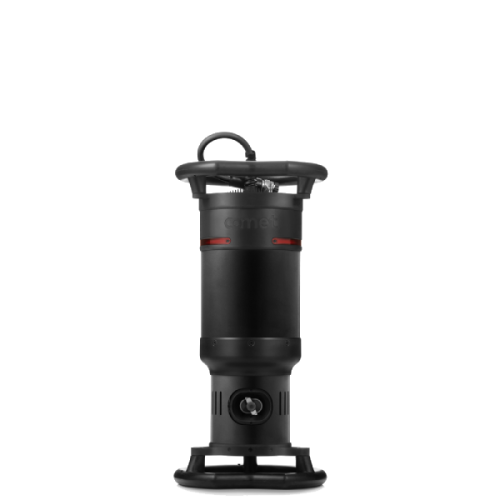
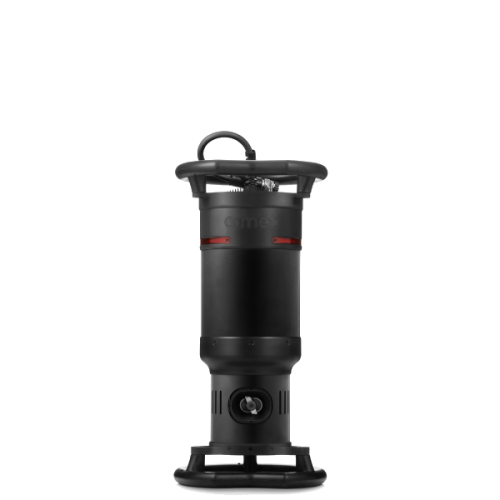
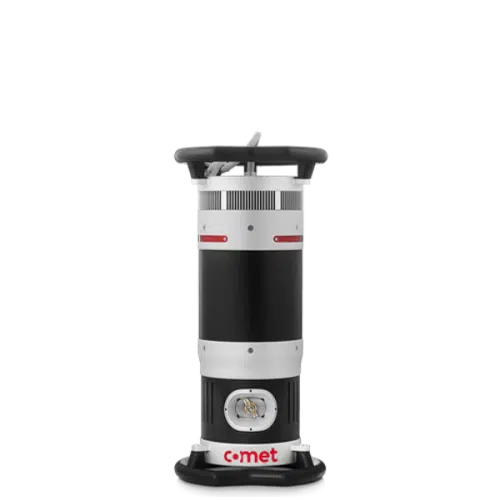
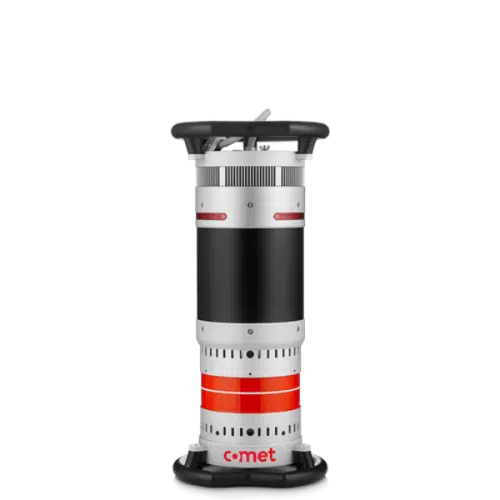
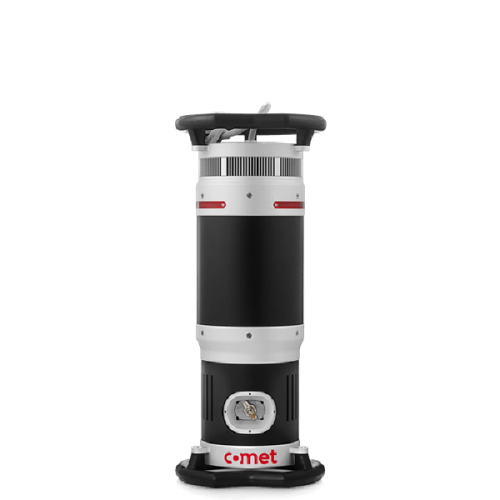
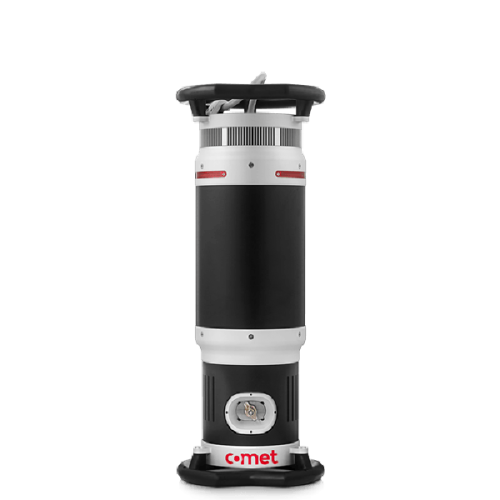
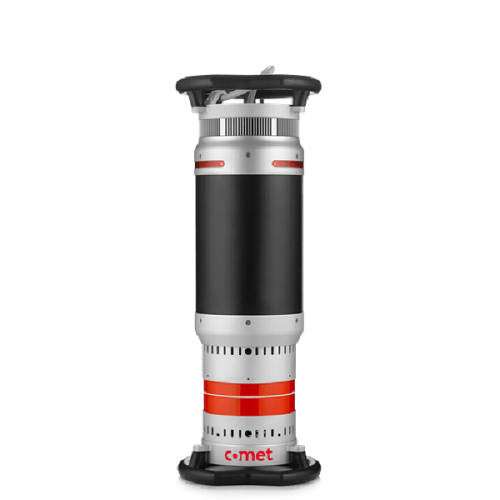
Choosing the Right Portable X-ray Generator for NDT
Selecting a portable X-ray generator starts with material thickness and density. Thicker or denser materials require higher kilovoltage to achieve adequate penetration and acceptable image density. The Comet ECO 160DS suits lighter inspection work — thin-wall pipe, small-diameter welds, and aluminium structures — while the EVO 225D, 300D, and 300P are rated for heavy-section carbon steel and alloy materials where higher energy output is required.
Duty cycle is the next variable. Systems used for high-volume production radiography need a generator that can sustain repeated exposures without extended cooling intervals. The EVO series is designed for more demanding throughput requirements; ECO systems suit lower-frequency inspection or project work where exposure intervals are less critical.
Constant Potential vs Pulsed X-ray Systems
Constant potential generators, including those in the Comet ECO and EVO range, produce a stable X-ray output that gives consistent exposure times and predictable film or detector response. This makes them the standard choice for weld inspection and pressure vessel examination where reproducibility is required for procedure qualification under AS 2062 or ASME Section V.
Pulsed X-ray systems generate short, high-intensity bursts of radiation. They are used in specific applications such as pipeline inspection in motion using pipe crawlers, or where very short exposure times are needed to prevent geometric unsharpness. RF Sales also stocks pipeline crawlers — if your project involves circumferential weld inspection of long pipeline runs, the pipeline crawler category is worth reviewing alongside these portable generators.
Field Use: Power, Portability, and Site Conditions
Australian field radiography is conducted across a wide range of environments — offshore platforms, remote pipeline corridors, refinery turnarounds, and infrastructure inspection in confined spaces. The Comet portable X-ray systems in this range are designed for that kind of deployment. Compact head geometry and appropriate cable lengths allow positioning in restricted areas, and the control units support the exposure distances required for radiation zone management under Australian state and territory licensing requirements.
Battery-powered operation is a consideration for remote sites without reliable mains access. Power configuration and battery availability vary by model, so confirm requirements with the RF Sales team when sending your enquiry.
Standards and Licensing for Portable Radiography in Australia
Industrial radiography using portable X-ray equipment in Australia is a licensed activity. Operators must hold a current radiation use licence issued by the relevant state or territory radiation regulator. Equipment must also meet applicable radiation safety standards and be used within the parameters of the site radiation management plan. For projects where NATA accreditation is required, the procedure and equipment specifications must align with the accredited methodology.
The broader radiography range on the RF Sales site covers the full scope of equipment for industrial X-ray and gamma inspection work, including stationary X-ray systems for fixed installations and digital and computed radiography solutions for sites moving away from film-based methods.
Request a Quote on Portable X-ray Systems
RF Sales supplies Comet portable X-ray systems to NDT inspection companies, asset integrity teams, and industrial contractors across Australia. Send an enquiry through the RF Sales website with your application details and the team will respond with product recommendations and pricing.
Frequently Asked Questions
What kilovoltage range is suitable for weld inspection on carbon steel pipe?
For carbon steel pipe in the typical wall thickness range of 6 mm to 25 mm, generators in the 160 kV to 200 kV range are generally suitable. Wall thicknesses above 25 mm require higher output, with the Comet EVO 225D or 300-series generators providing the penetration needed for heavier sections. The exact kV selection depends on material density, source-to-film distance, and the image quality requirements of your procedure.
Can these portable X-ray systems be used with digital detectors as well as film?
Yes. The Comet ECO and EVO generators are compatible with both conventional radiographic film and digital detector arrays, including flat panel detectors and computed radiography (CR) imaging plates. The generators produce a stable, constant-potential output — consistent kV and mA — which suits the exposure requirements of most digital imaging systems used in industrial NDT.
What Australian standards apply to portable X-ray radiographic testing?
Radiographic testing in Australia is commonly carried out to AS 2062 (radiographic testing of welds) and AS 3770, with some project specifications also referencing ASME Section V Article 2 or ISO 17636. The applicable standard will depend on the asset type, the client specification, and whether the work is being performed under a NATA-accredited scope.
Do I need a radiation licence to operate a portable X-ray system in Australia?
Yes. Industrial radiography is a controlled radiation practice in every Australian state and territory. Operators must hold a current radiation use licence issued by the relevant state or territory radiation regulator – for example, SafeWork NSW, WorkSafe Victoria, or the equivalent body in your jurisdiction. ARPANSA administers the national radiation protection framework under the Australian Radiation Protection and Nuclear Safety Act 1998, but individual occupational licences for industrial radiographers are issued at the state and territory level. Equipment must also be registered and used within an approved radiation management plan.
What is the difference between the Comet ECO and EVO series?
The ECO series is designed for lighter inspection work and lower-frequency use, making it suited to project radiography and applications where duty cycle is not a constraint. The EVO series is built for higher throughput requirements and supports a broader range of material thicknesses, with models extending to 300 kV for heavy-section inspection. Both series use constant-potential technology for stable, reproducible output.
Can RF Sales help me select the right system for my specific application?
Yes. Send an enquiry through the RF Sales website with details of your application — material type, thickness range, film or digital detection, and any relevant standard or procedure specification. The team can advise on generator model, accessories, and compatibility with your existing setup.
